Planning guide
China, Glassware & Flatware: A Renter's Guide
How to choose a dinnerware line, match glassware to your bar plan, pick a flatware pattern, and count place settings — with the 10% rule that saves every host.
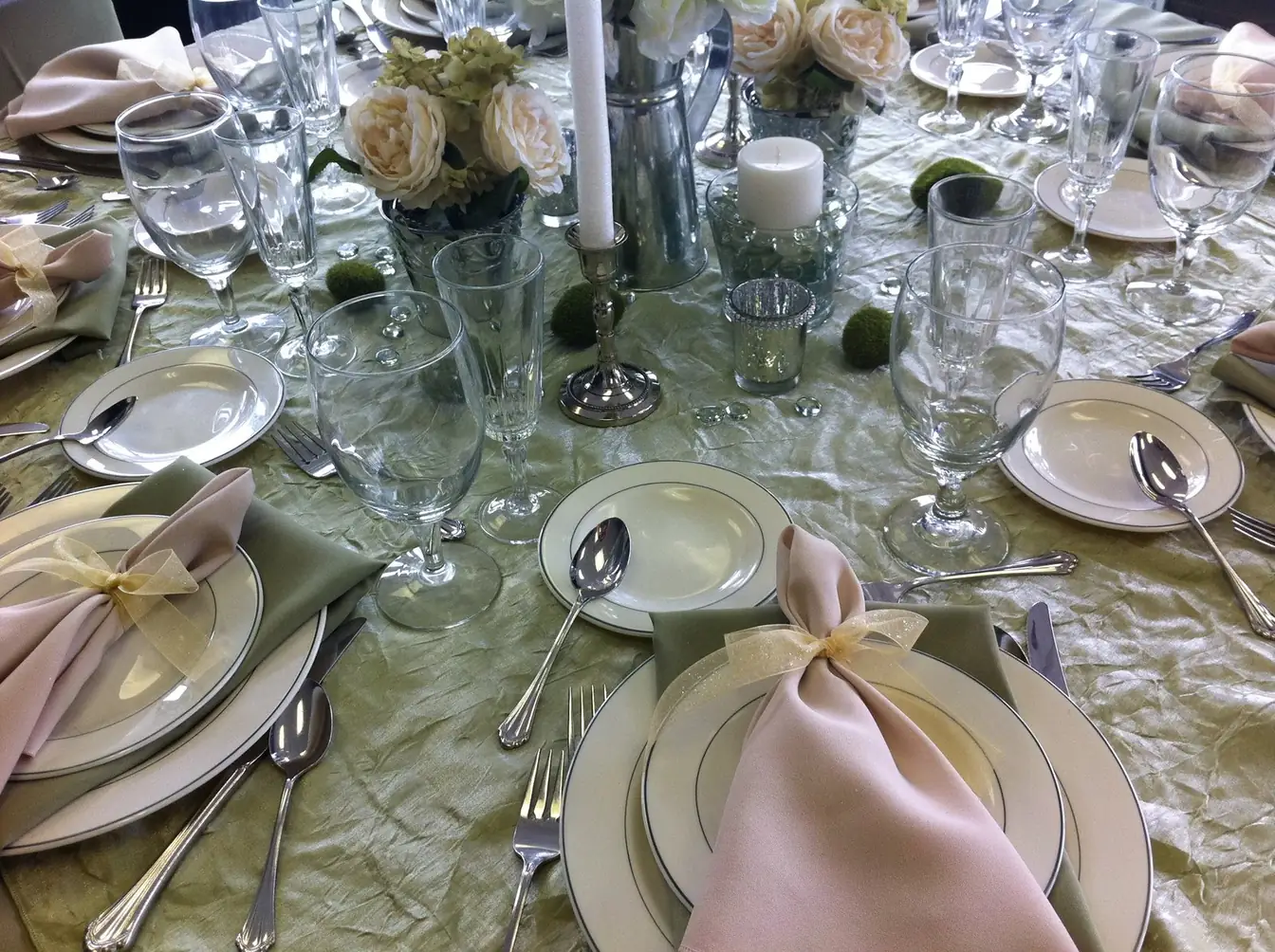
Tableware is where rented events quietly become real ones. Folding tables and good linens set the stage, but the plate, the glass, and the fork are what your guests actually touch all night. We have stocked full tableware since 1987 — five dinnerware lines, four flatware patterns, and around 35 kinds of glassware — which means the real question is not whether we have it. It is which combination is yours. Here is how to choose.
Step 1: pick your dinnerware line
We carry five lines. Each sets a different tone:
- White china is the do-everything choice. Round plates from a 10.75″ dinner down to a 6″ bread plate, plus square, rectangular, and triangle shapes if you want a modern edge. Caterers love white china because food looks best on it, and it matches every linen color you could pick.
- Gold band china puts a gold rim on the classic setting — dinner, salad, and bread plates plus soup bowls, cups, and serving pieces. It warms up ivory, champagne, and blush palettes and pairs naturally with brushed gold flatware.
- Silver band china does the same in cool tones — the right call with silver, blue, and jewel-tone linens.
- Platinum band china is the quietest of the metallics, a thin platinum line that reads formal without flash.
- Clear glass plates disappear on purpose. The linen shows through, so your color does the work — and etched and spiral patterns add texture without adding color. Clear glass is a favorite for luncheons, showers, and dessert tables.
Not sure? Every plate, shape, and price sits on our china rentals page — and our showroom is open Monday through Friday, 9 to 4, no appointment needed, so you can set a sample place setting on a linen swatch and let the decision make itself.
Step 2: build the place setting
A full plated-dinner setting, from the bottom up:
- Charger plate — the base that stays through the early courses. We stock 13″ plastic chargers in silver and gold, and beaded glass chargers when you want the charger to be jewelry.
- Dinner plate — the 10″ to 10.75″ plate in your line.
- Salad or first-course plate — the 7″ to 8.25″ size.
- Bread plate — the 6″ size, set upper left.
- Soup bowl if the menu calls for it.
- Cup and saucer if coffee service ends the meal.
Buffet dinners simplify: skip chargers, count dinner plates at the buffet rather than at seats, and add a separate dessert or cake plate — 6″ plates do that duty well.
Step 3: match glassware to the bar plan
You do not need every glass. You need the glasses your actual bar will pour:
- Every seat gets a water goblet. That one is not optional; we stock banquet goblets and larger water-and-tea goblets for the job.
- Wine with dinner: a 12.5 oz white wine glass and an 18 oz red covers a full wine service. Pouring one house wine? A teardrop wine glass is the classic all-purpose answer, and stemless wine glasses give the same range a modern shape.
- The toast: champagne flutes are traditional, coupes are vintage-glamorous, and stemless champagne glasses survive crowded trays best.
- A full bar wants hi-ball and rocks glasses as its backbone, plus martini and margarita glasses only if those drinks are actually on the menu.
- Coffee and dessert: china cups with saucers for a seated service, Irish coffee mugs for a coffee bar, demitasse cups for espresso, and punch cups if there is a punch bowl (we rent those too).
- Casual pours: pilsner glasses for beer, juice glasses for brunch, shot glasses in two sizes for the late crowd.
A simple planning frame many caterers use: figure the water goblet at every seat, one wine glass per pour you are offering, one flute per guest for the toast, and bar glasses at roughly one to two per guest for the evening — then let your caterer tune it to your crowd. Every glass named here is on the glassware rental list with its size and 2026 price.
Step 4: pick a flatware pattern
Four patterns, four personalities:
- Needlepoint — the slim classic. Disappears politely into any formal setting.
- Hammered — a faceted, catch-the-light texture that reads modern and a little rustic at once.
- Shell — a traditional sculpted pattern, at home next to band china.
- Brushed Gold — the statement piece. Pairs with gold band china, gold beaded chargers, and warm linen palettes.
Count flatware by the menu: a fork, knife, and one more piece (salad fork or spoon) per person is the working minimum; add a dessert fork or spoon per guest, cocktail forks for a raw bar or appetizer course, steak knives if the entree needs them, and demitasse spoons — stainless or gold — wherever espresso goes. All four patterns are priced piece by piece on our flatware rentals page.
How many to order: the counting rules
- One of each plate, per guest, per course it appears in. A plated dinner with salad, entree, bread, and cake means four plates per guest before coffee.
- Water goblet per seat, wine glasses per pour, flute per guest for the toast.
- Fork-knife-and-a-third per guest, plus dessert piece.
- Then add about 10% extra across the board. Plates chip, forks take mysterious walks, a guest brings a guest, and the cake table always needs three more of something. Ten percent is the difference between a hiccup and a crisis, and at rental prices — plates run $0.70 and most flatware $0.65 to $0.95 on our 2026 price list, confirmed on your quote — it is the cheapest insurance at the party.
A worked count: 100 guests, plated dinner with wine and cake
- Plates: 110 dinner, 110 salad, 110 bread, 110 cake plates (the 6″ size) — each count is 100 plus the 10% cushion.
- Chargers: 100, one per seat. Chargers leave with the first course, so they need less cushion — though a spare stack never hurts.
- Glassware: 110 water goblets, 110 white wine, 110 red wine, 110 champagne flutes for the toast. Add bar glasses to match your bar menu.
- Flatware: 110 each of dinner fork, salad fork, dinner knife, and dessert fork; teaspoons if coffee is served.
- Coffee service: china cups and saucers for the percentage of guests who actually take coffee — half is a common planning figure; your caterer will know your crowd.
Hand a list like that to any caterer and you will get a nod. That is the whole test.
Serving pieces: the table behind the table
The buffet and the service stations need their own list, and this is where a deep rental inventory earns its keep. Chafers keep hot food hot through a two-hour dinner service. Serving platters — white china, gold band, oval beaded — carry the passed and stationed food. Punch bowls in glass or silver anchor a beverage table, with punch cups to match. Bread baskets, gravy boats, cream and sugar sets, and salt and pepper shakers finish the tables themselves, and tongs, ladles, and serving spoons rent by the piece so every dish has its implement. Cake stands and cupcake stands build the dessert display. Walk your menu dish by dish and give every item a vessel and a server — it is a ten-minute exercise that prevents the classic day-of scramble.
The best part: rinse and return
No dishwashing. Rinse everything free of food, set it back in the crates it arrived in, and you are done — that is the whole job. Excessively dirty returns can carry a cleaning charge of up to the rental rate, so the rinse matters, but nobody is toweling stemware at midnight. If your situation genuinely will not allow rinsing, talk to us before the event and we will make special arrangements.
A note for planners and caterers
If you are ordering for a client, you already know the drill — send us the menu shape (courses, pours, service style) and headcount, and we will build the tableware count with you line by line. That back-and-forth is most of what we have done since 1987.
Common questions
How many napkins do I need for a wedding?
Plan two per guest — a dinner napkin at the place setting and one for the cocktail hour or the bar — then add about a 10% cushion for the cake table and the inevitable drops. Our 20″ × 20″ linen napkins run $0.65 each on the 2026 price list, confirmed on your quote, so the cushion is cheap insurance.
How many tablecloths do I need?
One per table — then walk the room and count the tables the guest list forgets: the buffet or serving tables, the cake table, and the gift table all need cloths too. A 100-guest reception at twelve guest rounds usually lands at sixteen or more cloths once the working tables are counted.
What is the difference between a charger plate and a dinner plate?
A charger is the decorative base plate that stays on the table while courses come and go; the dinner plate is served on top of it and cleared with each course. The charger keeps the setting dressed between courses and frames every plate that lands on it. On our 2026 price list, 13″ plastic chargers in silver or gold run $1.50 and beaded glass chargers run $6.00 — confirmed on your quote.
Pick your line and your pattern, then request a quote — we will count the full place setting with you and confirm every price on your quote.